
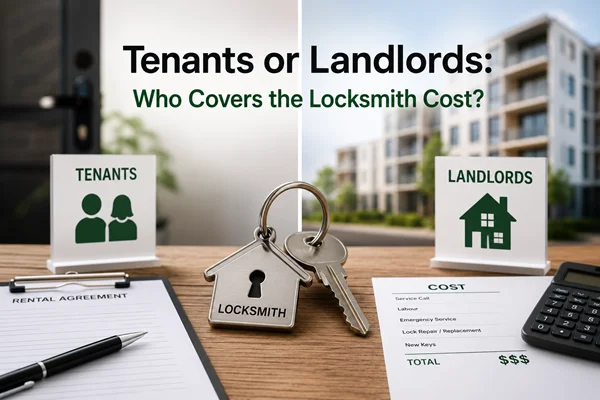
Lock and key issues can happen unexpectedly, whether it’s a lost key, broken lock, or emergency lockout. One of the most common questions in rental properties is: who is responsible for paying the locksmith bill — the tenant or the landlord?
The answer usually depends on the situation, the rental agreement, and local tenancy laws.
When the Tenant Usually Pays
In many cases, tenants are responsible for locksmith costs if the issue was caused by their own actions or negligence.
Common Situations Where Tenants Pay:
- Lost or stolen keys
- Locked out of the property
- Broken keys due to misuse
- Damage caused by the tenant
- Requesting extra keys for personal use
If a tenant accidentally locks themselves out or loses their keys, they will typically need to cover the emergency locksmith service cost.
When the Landlord Usually Pays
Landlords are generally responsible for maintaining the property and ensuring all locks are safe and functional.
Common Situations Where Landlords Pay:
- Faulty or worn-out locks
- Broken locks due to normal wear and tear
- Lock replacements after a break-in
- Security upgrades required by law
- Faulty doors or locking mechanisms
If the lock stops working because of age or poor maintenance, the landlord is usually responsible for arranging and paying for repairs.
Check the Rental Agreement
Every rental agreement can be different. Some lease agreements clearly outline who pays for locksmith services in different situations. It’s always a good idea to review the tenancy agreement before arranging any locksmith work.
Important Things to Check:
- Emergency lockout responsibilities
- Key replacement policies
- Maintenance obligations
- After-hours locksmith charges
What Happens in Emergency Situations?
During emergencies, such as a break-in or damaged lock that affects safety, landlords are often expected to act quickly to secure the property. In some cases, tenants may pay upfront for urgent locksmith services and later request reimbursement if the issue falls under the landlord’s responsibility.
Tips for Tenants and Landlords
For Tenants:
- Keep spare keys in a safe place
- Report faulty locks early
- Avoid forcing damaged locks
- Understand your lease terms
For Landlords:
- Maintain locks regularly
- Replace old or damaged hardware
- Respond quickly to security issues
- Clearly explain locksmith responsibilities in the lease
Final Thoughts
Responsibility for locksmith costs depends on the cause of the issue and the terms of the rental agreement. Generally, tenants pay for problems caused by lost keys or lockouts, while landlords cover repairs related to faulty or worn-out locks.
Clear communication and understanding the lease agreement can help both tenants and landlords avoid confusion and unexpected expenses.